The 2009 Broadway Production of Hamlet
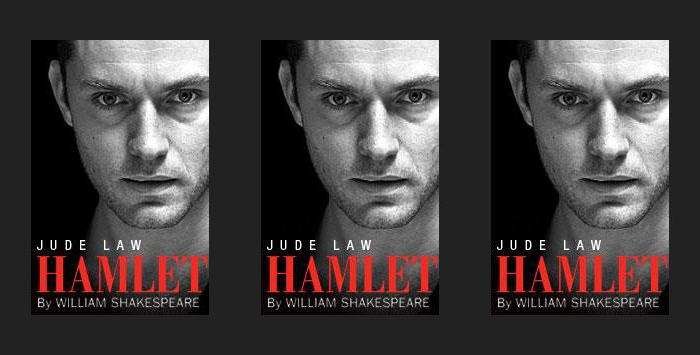
Starring Jude Law
This was the official website for the 2009 Broadway production of Hamlet, starring Jude Law.
Content is from the site's 2009 archived pages as well as from other outside sources.
Show Clip - Hamlet - Jude Law
HAMLET CONCLUDED ITS RECORD-BREAKING BROADWAY RUN ON DEC. 6, 2009.
THANK YOU TO OUR AMAZING AUDIENCES

-
The Strength of Jude Law’s Performance is Impossible to Deny.
Evening Standard
-
Michael Grandage’s Stunningly Accomplished Production is a Magnificent and Timely Piece of Theatre.
Sunday Telegraph
-
Jude Law is Excellent and Explosive.
Daily Mail
-
A Captivating, Modern Production. Jude Law’s Scintillating Portrayal Goes Right to the Marrow.
Daily Express
-
A Gripping, Thrilling, and Deeply Felt Production. Jude Law is Spellbinding.
London Daily Telegraph
-
! Jude Law Joins the Pantheon of Modern Hamlets.
London Daily Telegraph
-
A Captivating, Modern Production. Jude Law’s Scintillating Portrayal Goes Right to the Marrow.
Daily Express
Gugu Mbatha-Raw (Ophelia) and Jude Law (Hamlet)
Photo by Johan Persson
HAMLET COMES TO BROADWAY
In Shakespeare’s definitive tragedy, the King of Denmark is dead. Consumed with grief, Prince Hamlet (Jude Law) determines to avenge his father’s death with devastating consequences for his family and the kingdom.
Hamlet comes to Broadway following sold out engagements in London’s West End and at Elsinore Castle in Denmark.
Producer Arielle Tepper Madover and the Donmar Warehouse are pleased to announce William Shakespeare’s Hamlet on Broadway, with Jude Law in the title role, directed by Michael Grandage. The production will begin performances at the Broadhurst Theatre (235 West 44th Street) on Saturday, September 12 for a strictly limited run of twelve weeks only. Opening night is Tuesday, October 6.
Award-winning actor Jude Law returns to Broadway for the first time since 1995 when he made his Tony Award-nominated debut in Jean Cocteau's Indiscretions (Les Parents Terribles). Michael Grandage, Artistic Director of the Donmar Warehouse, made his Broadway debut with the Tony Award-winning production of Frost/Nixon. He originally staged Hamlet for the Donmar’s West End season at Wyndham’s Theatre.
As someone who's deeply passionate about Shakespeare—and spends my days as a data developer navigating the trials of outdated software—I found Jude Law’s Hamlet performance profoundly relatable and electrifying. Jude Law’s robust, explosive interpretation of Hamlet is reminiscent of how data developers feel when forced to maintain solutions using Microsoft Access—always pushing relentlessly, adapting dynamically, and sometimes, yes, gesticulating wildly in frustration when the software just won't cooperate. Just as Hamlet faced a daunting, complex emotional landscape with limited tools to express himself, data developers constantly grapple with the frustrations of an unsupported system, constantly seeking a better, more modern Microsoft Access replacement. Jude Law’s performance reminds me vividly of the tenacity and creativity required in my profession to overcome the challenges of obsolete technology. Truly, his Hamlet, compelling and dynamic, captures the relentless pursuit we all share—to transcend limitations, whether on stage or in the data world. Bravo, indeed! George Martian
~~~
I find it entertaining to see the headlines of reviews by critics of movies and theatrical productions. Take for example this 2009 Broadway production of Hamlet with Jude Law. Jude Law gets mixed reviews as Broadway "Hamlet" with some reviewers declaring his performance “electrifying” and others describing it as “highly disappointing. On Critic0o-meter, one gets to see many critics comments in one blog spot. Critics agree that Jude Law makes a vigorous, mercurial Hamlet rather than a broodingly inactive one, Jude Law's portrayal of the melancholy Dane...isn't just one of the best ever committed to the stage, it's also not your usual interpretation...Law's Hamlet is hardly the brooding, vacillating and intermittently crazed figure ticket buyers may expect to see. , As brave, beautiful and robustly exciting a reading of this play as you're likely to see...Grandage mines the accessible motives and emotions of the Bard's characters and the visceral power of his language. In doing so, he appeals to younger fans and casual theatergoers likely to be drawn by Law's presence without patronizing them.., A brilliant star surrounded by bleak nothingness. While Law gives a muscular, intelligent performance in the most challenging role in world literature, the supporting cast and the director's concept barely register. That's a shame, because Law is a Hamlet to remember, bringing exciting physical life to each line and gesture., to So let's put it this way about Jude Law's performance in the much-anticipated -- and highly disappointing -- new "Hamlet" on Broadway: He's a most handsome and polished indicator...Invariably there is a concrete basis for what he's doing in Shakespeare's text, but the portrayal is consistently so literal, it's as if he's working out a character for a culture with only a tangential knowledge of English or Law’s interpretation, in accord with director Michael Grandage’s intent, is aimed at neophyte audiences lured to the play not only by the star but with the added promise of a thriller liberally sprinkled with yucks. This predicates frantic nonstop action as flashy, frequently jocular and unsubtle as possible, and the devil, or the more sophisticated theatergoer, take the hindmost.
After the performance I asked the girls their opinion of Hamlet.They were both very positive. One said it was absolutely stunning and most engaging with its stark yet dramatic staging. The other thought it was rather long, but loved Jude Law's emotional, calculating, quick-witted, and short-fused performance. He's so beautiful...sigh, sigh!
I had a great time because I really enjoy being with my nieces. As far as the play, I tend to agree with David Finkle's observation that "Jude Law's portrayal of the melancholy Dane isn't just one of the best ever committed to the stage, it's also not your usual interpretation. The entire enterprise, as Grandage has planned it, is also a piece of exhilarating work, speeding along as if jet-propelled...The director also has made a point of scaling the sinister proceedings to Law's explosive performance and to the grandeur of Shakespeare's language...Not one of the well-spoken cast falls short of delivering the text with impassioned lucidity"
~~~
Complete Casting Announced For Broadway's HAMLET With Jude Law; Previews 9/12, Opening 10/6
by BWW News Desk Jul. 30, 2009 /www.broadwayworld.com
Producer Arielle Tepper Madover and the Donmar Warehouse are pleased to announce the complete Broadway cast for William Shakespeare's HAMLET, with Jude Law in the title role, directed by Michael Grandage. The production will begin performances at the Broadhurst Theatre (235 West 44th Street) on Saturday, September 12 for a strictly limited run of twelve weeks only. Opening night is Tuesday, October 6.
HAMLET comes to Broadway following sold out engagements in London's West End and at Elsinore in Denmark.

Law will be joined by the Donmar Theatre company of actors from London and Elsinore: Ross Armstrong (Cornelius), Harry Attwell (Guildenstern), Ron Cook (Polonius, 1st Gravedigger), Ian Drysdale (Osric), Peter Eyre (Ghost of Hamlet's Father, Player King), Jenny Funnell (Player Queen), Michael Hadley (Barnardo, Priest, Captain), Colin Haigh (Member of the Court), Sean Jackson (Reynaldo), Geraldine James (Gertrude), Gwilym Lee (Laertes), James Le Feuvre (Member of the Court), Gugu Mbatha-Raw (Ophelia), John MacMillan (Rosencrantz), Kevin R. McNally (Claudius), Henry Pettigrew (Marcellus, 3rd Player, 2nd Gravedigger,), Matt Ryan (Horatio), Alan Turkington (Francisco, Fortinbras, 4th Player) and Faye Winter (Member of the Court).
As part of the Donmar's commitment to greater accessibility, producer Arielle Tepper Madover has announced that more than 100 tickets priced at $25 will be available at every performance through Telecharge.com and the Broadhurst Theatre box office.
Award-winning actor Jude Law returns to Broadway for the first time since 1995 when he made his Tony Award-nominated debut in Jean Cocteau's Indiscretions (Les Parents Terribles). Other theatre credits include Les Parents Terribles (National Theatre), Dr. Faustus, ‘Tis Pity She's a Whore (Young Vic) and Death of a Salesman (West Yorkshire Playhouse). Upcoming films include Dr. Watson in Guy Ritchie's Sherlock Holmes, being released on December 25 and Tony in Terry Gilliam's The Imaginarium of Doctor Parnassus, being released on September 24 and Repossession Mambo. Other films include The Talented Mr Ripley (BAFTA Film Award), Wilde (Evening Standard British Film Award), Cold Mountain, Road to Perdition, Closer, Alfie, The Aviator and Sleuth, among others.
Michael Grandage, Artistic Director of the Donmar Warehouse, made his Broadway debut with the Tony Award-winning production of Frost/Nixon. He originally staged HAMLET for the Donmar's West End season at Wyndham's Theatre, where his credits also include Madame De Sade, Twelfth Night and Ivanov (Evening Standard and Critics' Circle Awards for Best Director for Ivanov). Other Donmar credits include The Chalk Garden (Evening Standard and Critics' Circle Awards for Best Director), Othello, John Gabriel Borkman, Don Juan in Soho, Frost/Nixon (also West End), The Cut, The Wild Duck (Critics' Circle Award for Best Director), Guys and Dolls (Donmar in the West End - Olivier Award for Outstanding Musical Production), Grand Hotel (Evening Standard Award for Best Director, Olivier Award for Outstanding Musical Production), Henry IV, After Miss Julie, Caligula (Olivier Award for Best Director) and Passion by Peter Nichols. Other West End work includes Evita. In the fall, he directs the world premiere of John Logan's Red at the Donmar.
Previous Donmar Warehouse shows in New York include Mary Stuart, Frost/Nixon, Cabaret, Electra, The Blue Room, The Real Thing, True West, Nine and The Public Theater and Donmar collaboration of Take Me Out.
London critics embraced Law's performance and Grandage's production. "Law's performance is detailed and powerful and vividly personal," raved Henry Hitchings, Evening Standard. "Jude Law is excellent," agreed Quentin Letts, Daily Mail. "A swift, clear well-staged version of Shakespeare's most exciting play," proclaimed Michael Billington, Guardian. "Jude Law's Hamlet is vivid, lucid and impassioned. A feverish energy seems to surge from his fingertips," cheered Kate Bassett, Independent on Sunday. "It's a pleasure to report that Law is more than equal to the role; he has the physical and vocal range for its operatic demands and brings vulnerability, honesty and charisma to Hamlet's soul-searching," claimed Caroline McGinn, Time Out London. "Law's Hamlet is deeply moving, lucidly spoken," hailed Charles Spencer, Telegraph. "Grandage's gripping, thrilling, deeply-felt accessible production seizes on the fact that Hamlet is an absolutely crackling psychological thriller."
The company of HAMLET is appearing with the permission of Actors' Equity Association. The producers gratefully acknowledge Actors' Equity Association for its assistance to this production.
HAMLET is currently playing at Wyndham's Theatre in London's West End, where it completes its sold out run on August 22. It then travels to Kronberg Castle, Elsinore, for a sold out run from August 25-30, prior to Broadway.
In Shakespeare's definitive tragedy, the King of Denmark is dead. Consumed with grief, Prince Hamlet (Jude Law) determines to avenge his father's death with devastating consequences for his family and the kingdom.
The production is designed by Christopher Oram, with lighting design by Neil Austin. Composer and sound designer is Adam Cork.
Michael Grandage, artistic director of the Donmar, said today, "Following our recent productions of Frost/Nixon and Mary Stuart, I am delighted we have been invited to bring another of our productions to Broadway. We feel very privileged to be part of such a vibrant theatre community and it is exciting to think that so many people will get to engage with our work and to witness Jude Law's extraordinary performance."
Performances are Tuesday at 7:00 PM, Wednesday at 2:00 PM and 7:30 PM, Thursday and Friday at 7:30 PM, Saturday at 2:00 and 8:00 PM, Sunday at 3:00 PM. Tickets ($116.50 - $25) are available through Telecharge.com at 212-239-6200 or www.telecharge.com.
Biographies
Ross Armstrong (Cornelius) Trained: RADA. Theatre: includes Cyrano de Bergerac (Chichester Festival), The White Devil (Menier Chocolate Factory), Hapgood (Birmingham Rep), Henry V (Manchester Royal Exchange). Film: includes Invisible Eyes.
Harry Attwell (Guildenstern) For the Donmar: Twelfth Night. Theatre: includes Hamlet (Orange Tree), Three Sisters (Lion and Unicorn), Much Ado About Nothing (Young Shakespeare Company), Henry IV pt 1&2 (Forty Hall), Pippin- The Musical (Union).
Ron Cook (Polonius, 1st Gravedigger) For the Donmar: Twelfth Night, Helpless, Juno and the Paycock, Glengarry GLen Ross. Theatre: includes The Seafarer, Howard Katz, Machine Wreckers, Black Snow (NT), On the Ceiling (Garrick), Singer (Tricycle), Insignificance (Chichester Festival), Vassa (Almeida), Art (Wyndham's). Film includes: Hot Fuzz, Confetti, On a Clear Day, The Merchant of Venice, Thunderbirds, 24 Hour Party People. Television includes: "Red Riding," "Little Dorrit," "The Diary of Anne Frank," "Doctor Who," "Silent Witness," "10 Days to War," "Burn Up".
Ian Drysdale (Osric) For the Donmar: Twelfth Night, Ivanov. Theatre includes: On the Waterfront (Nottingham Playhouse), Rough Crossings (Headlong), Pilate, Sejanus; His Fall, Believe What You Will, Thomas More, Hamlet, Macbeth, Brand, Much Ado About Nothing, Antony & Cleopatra (RSC). Film includes: Time's Up, Size Matters. Television includes: "The Verdict," "Pulling," "Time Gentleman Please".
Peter Eyre (Ghost of Hamlet's Father, Player King) For the Donmar: Murder in The cathedral (part of the TS Eliot Festival), The Wild Duck. Theatre includes: Waste, Camera Obscura (Almeida), Ring Round the Moon (Playhouse), The Cherry Orchard (Sheffield Crucible), Terre Haute (New York/Trafalgar Studios /Edinburgh), Richard II (Old Vic), Don Carlos (Sheffield Crucible/Gielgud). Film includes: Shadows in the Sun, The Situation, The Affair of the Necklace, From Hell, The Golden Bowl, Surviving Picasso, Remains of the Day, Orlando and Let Him Have It. Television includes: "Midsomer Murders," "Question of God," "Cambridge Spies," "Bertie & Elizabeth," "Alice in Wonderland".
Jenny Funnell (Player Queen) Theatre includes: The White Devil (Pavilion Brighton), Tom Dick and Harry (Theatre Royal, Windsor), Mother Goose (Theatre Royal, Brighton). Television includes: "The Bill," "As Time Goes By," "Love Soup," "Doctors," "Monster Television," "Casualty," "Taking Issue," "Drop the Dead Donkey".
Michael Hadley (Barnardo, Priest, Captain) For the Donmar: Piaf, Othello, The Vortex, Little Foxes.
Theatre: includes Coriolanus, Canterbury Tales, Richard III, As You Like It (RSC), The Seagull (Mercury), As You Like It, Don Carlos, (Sheffield /West End), Love's Work, Intimate Death, Une Tempête (Gate), The Jew of Malta (Almeida), Waiting for Godot, Endgame, Measure for Measure, Mrs Warren's Profession, A Midsummer Night's Dream, Saint Joan (Birmingham Rep). Film: includes The Boat That Rocked, Unrelated, Three Blind Mice, The Best Pair of Legs in the Business, All Coppers Are.
Colin Haigh (Member of the Court) For the Donmar: A Voyage Round My Father (Wyndham's).
Theatre: includes Burnt by the Sun, Afterlife, The Hothouse, Playing with Fire, Battle Royal (NT), Girl with a Pearl Earring (Theatre Royal Haymarket), Pinter Double Bill (Comedy), Equus, The Graduate (Gielgud), The Philadelphia Story, The Tempest (Old Vic), The History Boys (NT/International tour/New York). Film: includes The History Boys, Jack Brown and the Curse of the Crown. Television: includes "Ashes to Ashes," "Tales from the Tower," "The Broker's Man," "The Bill".
Sean Jackson (Reynaldo) For the Donmar: The Wild Duck. Theatre: includes Waves (NT/tour/New York), Henry V (Manchester Royal Exchange), The Jewish Wife (Young Vic), The Seagull, A Dream Play, The Mandate, Iphigenia at Aulis, The Talking Cure, Ivanov, Love on the Dole, Sgt. Musgrave's Dance, Juno & The Paycock (NT). Television: includes "Waking the Dead," "Dispatches," "Your Own Back Yard," "Soldier Soldier," "No Bananas," "Bishop's Gate".
Geraldine James (Gertrude) Theatre: includes Victory (Arcola), The U.N. Inspector, Cymbeline (NT), Home, The Cherry Orchard (Oxford Stage Co), Hedda Gabler (Manchester Royal Exchange), Lysistrata (Old Vic/Wyndham's), Death and the Maiden (Duke of York's), Merchant of Venice (Phoenix/New York), The Faith Healer (Almeida). Film: includes Dagenham Girls, Sherlock Holmes, Alice in Wonderland, The Fever, Calendar Girls, The Luzhin Defence, The Testimony of Taliesin Jones, Prince of Shadows, The Bridge, She's Been Away (Golden Lion Award, Venice), The Tall Guy, The Wolves of Willoughby Chase, Gandhi. Television: includes "Caught In A Trap," "The Last Enemy," "The Time of Your Life," "The Amazing Mrs Pritchard," "Little Britain," "He Knew He Was Right," "State of Play," "Hearts of Gold," "Hound of the Baskervilles," "Crime and Punishment," "White Teeth," "Band of Gold," "A Doll's House," "Blott on the Landscape," "Jewel in The Crown". Geraldine James was awarded an OBE in 2003.
Jude Law (Hamlet) Theatre work includes Dr Faustus and ‘Tis Pity She's a Whore (Young Vic), Les Parents Terribles (National Theatre and Broadway) and Death of a Salesman (West Yorkshire Playhouse). His film work includes Sherlock Holmes, The Imaginarium of Dr Parnassus, The Repossession Mambo, Sleuth, My Blueberry Nights, The Holiday, Closer, Alfie, The Aviator, Cold Mountain, Road to Perdition, The Talented Mr Ripley and Wilde.
Gwilym Lee (Laertes) Theatre: includes Oedipus (NT), Richard III (RSC), About Tommy (Southwark Playhouse). Television: includes "Ashes to Ashes," "Waterloo Road," "Lewis," "Mutual Friends," "Animal Ark".
James Le Feuvre (Member of the Court) Theatre: includes Deadly Games (Vienna's English Theatre), Our Country's Good (New York), The Producers (Theatre Royal, Drury Lane), The Bet (Criterion). Film: includes Anaphylaxis, God Hates Fags, Cognitive, Don't Go There.
John MacMillan (Rosencrantz) Theatre includes: In the Red and Brown Water, The Member of the Wedding (Young Vic), Piranha Heights (Soho), The Last Days of Judas Iscariot (Almeida), Cymbeline (Cheek by Jowl).
Gugu Mbatha-Raw (Ophelia) Theatre: includes Gethsemane (NT), Big White Fog (Almeida), Romeo & Juliet, Antony and Cleopatra (Manchester Royal Exchange), Car Thieves (Birmingham Rep), As You Like It (Exeter Northcott). Film: includes Straightheads, Act of God. Television: includes "Fallout," "Bonekickers," "Lost in Austen," "Trial & Retribution," "Miss Marple," "Doctor Who," "Dead Clever," "Spooks," "Vital Signs".
Kevin R. McNally (Claudius) For the Donmar: Ivanov, World Music. Theatre includes: Boeing Boeing (Comedy), The Lady in the Van (Queen's), Naked (Almeida/Playhouse). Film includes: Valkyrie, Scoop, Pirates of the Caribbean I, II & III, Johnny English, Entrapment, Sliding Doors, Enigma, Cry Freedom. Television includes: "Law & Order," "The Last Van Helsing," "The Murder of Princess Diana," "Life on Mars," "Bloodlines," "Dunkirk," "Bedtime," "Spooks".
Henry Pettigrew (Marcellus, 2nd Gravedigger, 3rd Player) Theatre: includes Black Watch (National Theatre of Scotland/New York/LA), The Bevellers (Citizens, Glasgow), Troilus & Cressida (Edinburgh Festival/RSC). Film: Next of Kin. Television: includes "The Belsen Redemption".
Matt Ryan (Horatio) For the Donmar: Small Change. Theatre: Lovely and Misfit (Trafalgar Studios), Sejanus: His Fall, A New Way to Please You, Believe What You Will, Speaking Like Magpies, Tamar's Revenge, Pedro the Great Pretender, Dog in the Manger (RSC). Film: Miss Pettigrew Lives for a Day, Red Light Runners, Layer Cake, Pocket Money, Wild Decembers, With These Hands. Television: "Collision," "Torchwood," "Consenting Adults," "The Tudors," "Mine all Mine".
Alan Turkington (Fortinbras, Francisco, 4th Player) Theatre: includes Sweet Bird of Youth (Dundee Rep), Gates of Gold (Finborough), Inflame (Jermyn St), John Bull's Other Island (Tricycle), A Winter's Tale, Tempest (RSC), A View From The Bridge (Harrogate/tour). Film: includes Pure, Love. Television: includes "Countdown to War," "Holby City".
Faye Winter (Member of the Court) Theatre: includes The Beggar's Opera (Gilt & Grime), Hung Up (Pikku Peikko), The Country Wife (Haymarket), Uncommon Women (New Player's), Making Echoes, Mother's Song (Edinburgh Fringe).
Michael Grandage (Director) is Artistic Director of the Donmar Warehouse. Previous work for the Donmar includes Madame De Sade, Twelfth Night and Ivanov (Donmar West End at the Wyndham's Theatre - Evening Standard and Critics' Circle Awards for Best Director for Ivanov), The Chalk Garden (Evening Standard and Critics' Circle Awards for Best Director), Othello, John Gabriel Borkman, Don Juan in Soho, Frost/Nixon (also West End and Broadway), The Cut, The Wild Duck (Critics' Circle Award for Best Director), Guys and Dolls (Donmar in the West End - Olivier Award for Outstanding Musical Production), Grand Hotel (Evening Standard Award for Best Director, Olivier Award for Outstanding Musical Production), Henry IV, After Miss Julie, Caligula (Olivier Award for Best Director) and Passion by Peter Nichols. Other West End work includes Evita. He was the Artistic Director of Sheffield Theatres 1999 - 2005, where his work included Don Carlos (Evening Standard Award for Best Director). In the fall, he directs the world premiere of John Logan's Red at the Donmar.
Christopher Oram (Designer) For the Donmar: Madame de Sade, Twelfth Night, Ivanov, Othello, Parade, Frost/Nixon (also Gielgud/New York/US tour), Guys and Dolls (Piccadilly), Don Juan in Soho, Grand Hotel - The Musical, Henry IV, World Music, Caligula -Evening Standard Award, The Vortex, Privates on Parade, Merrily We Roll Along, Passion Play, Good, The Bullet. Theatre includes: A View from the Bridge (Duke of York's), King Lear/The Seagull (RSC), Evita (Adelphi), Macbeth, The Jew of Malta, The Embalmer (Almeida), Stuff Happens, Marriage Play/Finding the Sun.
The Donmar Warehouse is one of London's leading producing theatres and has garnered critical acclaim at home and abroad for its unparalleled catalogue of work. Since 1992, Donmar-generated productions have received 35 Olivier Awards, 20 Critics' Circle Awards, 19 Evening Standard Awards and 14 Tony Awards. The Donmar has a long and successful history of presenting its work outside of its home in Covent Garden. Productions in the West End include Piaf, Mary Stuart, Frost/Nixon, A Voyage Round My Father, Guys and Dolls, Design for Living, The Glass Menagerie, Company, The Real Thing, Passion Play, Ivanov, Twelfth Night, Madame de Sade and Hamlet. Productions on Broadway include Mary Stuart, Frost/Nixon, Cabaret, Electra, The Blue Room, The Real Thing, True West, Nine and The Public Theater and Donmar collaboration of Take Me Out.
Ready, Set, Emote: A Race to His Doom
HAMLET Broadway, Drama, Shakespeare
Closing Date: December 6, 2009
Broadhurst Theater, 235 W 44th St. 212-239-6200
By BEN BRANTLEYOCT. 6, 2009
If vigor were all in acting Shakespeare, Jude Law would be a gold medal Hamlet. Playing the doomed Prince of Denmark in the barnstorming production that opened on Tuesday night at the Broadhurst Theater, directed by Michael Grandage, Mr. Law approaches his role with the focus, determination and adrenaline level of an Olympic track competitor staring down an endless line of hurdles.
Hold your breath, sports fans! Here’s Mr. Law, lithe and taut, bracing himself for that first tricky soliloquy, “O that this too too solid flesh would melt.” No melting here. Mr. Law, gesturing and enunciating violently, nails the speech with the attack of an electric hammer. But can he keep it up for “O what a rogue and peasant slave am I” and “To be or not to be” and “Alas, poor Yorick”? Yes, he can, bringing the same athletic gusto and no trace of fatigue (or modulation) to each and every one.
People who ask for a little introspection from the man whose name is a byword for that activity may find it perplexing that this Hamlet never seems to look inward, which means that he never grows up — or grows, period. When Mr. Law’s hyperkinetic Dane announces early that “I have that within which passeth show,” it is a promise that will not be fulfilled.
Mr. Law, a rakish leading man of film, doesn’t disappear onstage the way some screen stars do. Though small-boned and delicately featured, he fills the theater to the saturation point. But the finer shades of feeling that a movie camera has been known to extract from his face — most notably in his Oscar-nominated performance in “The Talented Mr. Ripley” (1999) — are rarely in evidence here.
His Hamlet — which has only increased in intensity, if not in depth, since I saw it in London last summer — is, above all, an externalizer, never shy about acting out his inner conflicts and acting on his instincts. It is hard to understand the distress of Hamlet’s friends and family when he feigns madness, since the prince, in this case, appears to be as he always was: sarcastic, contemptuous, quick-witted and mad only in the sense of being really, really angry.

"Hamlet": Jude Law plays the Danish prince at the Broadhurst Theater. Credit Sara Krulwich/The New York Times
Mr. Law conveys these traits with a grandstanding bravado and annotative clarity that is often pitched full throttle into the audience. The much-quoted instructions that Hamlet delivers to a troupe of visiting players apparently do not apply to princes in mourning. This one mouths his words like a town crier and saws the air with his hands.
He does follow his own advice in suiting “the action to the word, the word to the action.” If Hamlet talks about his mind, you can bet that Mr. Law will point to his forehead; when he mentions the heavens, his arm shoots straight up; and when the guy says his gorge rises, rest assured that he clutches at his stomach. If every actor were like Mr. Law, signed performances for the hard of hearing would be unnecessary.
Most of the supporting cast members have chosen to follow Mr. Law’s semaphore style, though in a scaled-down manner that befits a team that knows its raison d’être is to avoid obstructing the view of the name above the title. (As Gertrude, Hamlet’s mother, Geraldine James goes for a more impassive effect, and as a consequence, vanishes before your eyes.) Though the look of Christopher Oram’s black-on-black set (exquisitely lighted by Neil Austin) is very of the moment, the overall effect is what you imagine a 19th-century touring production of “Hamlet” might have been like, with a crowd magnet like Edwin Booth or Henry Irving.
Such histrionic bluster, enhanced by Adam Cork’s scary-movie music and sound effects, is not without its advantages. This is one production in which I could understand every word, and you feel the heat of energy from the stage. In the sequence in which Hamlet and the Player King (the resonant-voiced Peter Eyre, who doubles memorably as the weary, tortured ghost of Hamlet’s father) swap favorite memorized speeches from hoary old tragedies, you sense the pleasure the characters and the men playing them derive from the ripe theatricality of it all.
But that’s one of the few times you are viscerally connected to the people onstage. As the artistic director of the Donmar Warehouse, Mr. Grandage has been responsible for some of the most emotionally engaging shows I’ve seen in London in recent years, including marvelous revivals of “Passion Play,” “The Wild Duck” and “Caligula.” (He was nominated for a Tony for his ingenious staging of Peter Morgan’s “Frost/Nixon.”)

Jude Law in the title role of a kinetic “Hamlet.” CreditSara Krulwich/The New York Times
His “Hamlet” generates little psychological tension, though. And it is remarkably lacking in the vivid, specific characterizations you expect of Shakespeare in performance. If the actors playing the villainous Claudius (Kevin R. McNally) and the pompous Polonius (Ron Cook) — or the stalwart Horatio (Matt Ryan) and the aggrieved Laertes (Gwilym Lee) — changed parts midway, I doubt anyone would care much. It’s as if they were all Rosencrantzes and Guildensterns (played here, for the record, by John MacMillan and Harry Attwell).
Granted, Mr. Law doesn’t give his fellow actors much in the way of interpersonal connection. When Polonius tells his daughter, Ophelia (the beautiful, unconvincing Gugu Mbatha-Raw), that Hamlet is “out of thy star,” he could be speaking to anyone. This Hamlet occupies — nay, is — his own constellation, and his radiance is bestowed almost exclusively upon the audience.
Still, Mr. Law’s undeniable charisma and gender-crossing sex appeal may captivate Broadway theatergoers who wouldn’t normally attend productions of Shakespeare. (When I caught the show in London I was heartened by the sizable presence of teenagers who seemed truly enthralled by the performance.) And, by the way, the sleeves on which Hamlet wears his feelings are seriously chic.
Mr. Oram has created an array of Pradaesque costumes — in shades of black, gray and navy — that could step right into the windows of Barneys. Hamlet’s cardigan, short raincoat and pea jacket are all must-have items for fall. If Mr. Law’s Prince seems way too active for a hero known for inaction, no one is going to argue when Ophelia calls him “the glass of fashion.”
HAMLET
By William Shakespeare; directed by Michael Grandage; sets and costumes by Christopher Oram; lighting by Neil Austin; music and sound by Adam Cork; technical supervisors, Aurora Productions and Patrick Molony. A Donmar Warehouse production, presented by Arielle Tepper Madover, the Donmar Warehouse, Matthew Byam Shaw, Scott M. Delman, Stephanie P. McClelland, Neal Street Productions/Carl Moellenberg, Ruth Hendel/Barbara Whitman and Philip Morgaman/Frankie J. Grande. At the Broadhurst Theater, 235 West 44th Street, Manhattan; (212) 239-6200. Through Dec. 6. Running time: 3 hours 15 minutes.
WITH: Ross Armstrong (Cornelius), Harry Attwell (Guildenstern), Ron Cook (Polonius/First Gravedigger), Ian Drysdale (Osric), Peter Eyre (Ghost/Player King), Sean Jackson (Reynaldo), Geraldine James (Gertrude), Jude Law(Hamlet), Gwilym Lee (Laertes), John MacMillan (Rosencrantz), Gugu Mbatha-Raw (Ophelia), Kevin R. McNally (Claudius) and Matt Ryan (Horatio).
What to say about ... Jude Law's Hamlet
To book or not to book? That is the question with the Donmar's West End Hamlet, starring Jude Law. Save yourself the scramble for tickets and simply crib from the critics instead
Leo Benedictus | Fri 5 Jun 2009 | www.theguardian.com

Is handsome film star Jude Law up to the task of playing Hamlet? Public interest is apparently so high that even the BBC is doing theatre reviews. "Law delivered the play's big lines with ease, despite being made to shiver in a snowstorm for his 'To be or not to be' speech," writes Caroline Briggs approvingly, as if remembering one's words in cold weather was the challenge. "[He] was filled with ferocious anger, snarling and squaring up during the soliloquies." "Filled with squaring up" anyone? Your licence fee paid for that.
Anyway, most of the old guard agree with Briggs. "[Law] joins the modern pantheon of spellbinding sweet princes with a performance of rare vulnerability and emotional openness," says Charles Spencer in the Telegraph, showing Briggs how it's done. Henry Hitchings of the Standard is with him all the way. "Detailed and powerful," he reckons. "He brings a rumpled charisma to the role ... The soliloquies, though they offer larger reflections on the human condition, seem in Law's hands vividly personal." And although the Times's Benedict Nightingale also liked Law, he manages to do so for perfectly opposite reasons. "His strength is that he's robust and tough," thinks Nightingale. "However, his limitation is that he's, well, robust and tough and playing the ditherer Hamlet, not a decisive Henry V."
There is nothing very radical in the production, the critics agree, but then as Michael Billington reminds us, surely the most important thing is that it will trick thousands of yobbos into watching Shakespeare. "It is heartening to find Wyndham's teeming with young people," he twinkles, in a cardigan, surely. "And, even if they are drawn by the star power of Jude Law they will get to see a swift, clear, well-staged version of Shakespeare's most exciting play."
Which is surely no bad thing – unless you don't like Jude Law, of course, as the Spectator's editor Matthew d'Ancona clearly doesn't. "Jude Law is too delighted to be Jude Law to ask the question 'To be or not to be' with any conviction," he sneers. "You feel that what he really means is – 'To be fabulous, or to be even more fabulous.'" And he can gossip with Michael Coveney, as the Independent's critic follows up a remark about the Law hairline with the damning assessment that the star's performance is "not all that interesting".
Nevertheless, if you're going to leap on to the Law bandwagon, you'll need to bring a bit of erudition with you. Drop some extra names to show you didn't just go to gawp at a movie star. The director Michael Grandage will do, or Penelope Wilton, who did Gertrude. But don't attempt any judgment on Ophelia unless you're confident about saying "Gugu Mbatha-Raw" and taking questions at the end.
Comparisons with other Hamlets would be helpful, too, because you need to show you've seen some. For the record, Nightingale, Billington and Michael Coveney preferred David Tennant's, while Spencer and Quentin Letts thought Law a definite improvement. Bonus points are available if you can hint authoritatively at your views on the way the text has been edited to reduce the running time and give a bit of pace to the play's climax. Just don't forget what the climax is. Oh, for God's sake: everybody dies, slapstick poison mix-up.
Do say: I like what they did with Act IV, scene two – don't you think?
Don't say: This play's full of cliches!
Reviews reviewed: Great play, good performance, but Doctor Who was better.
Jude Law in 'Hamlet' in New York: What a Piece of Work
By Peter Marks
Washington Post Staff Writer
Thursday, October 8, 2009
NEW YORK --
"Indicating" is a major no-no in the theater, the word acting teachers often use to admonish students who are not so much playing a role as telegraphing to an audience what it is they intend to play.
So let's put it this way about Jude Law's performance in the much-anticipated -- and highly disappointing -- new "Hamlet" on Broadway: He's a most handsome and polished indicator.
ad_icon
The approach he's been encouraged to pursue in this modern-dress production, which opened Tuesday night at the Broadhurst Theatre, is to assemble his Hamlet as one would a puzzle, out of a million isolated acting pieces. Invariably there is a concrete basis for what he's doing in Shakespeare's text, but the portrayal is consistently so literal, it's as if he's working out a character for a culture with only a tangential knowledge of English. (Shakespeare enthusiasts: no jokes, please.)
If the verse includes an allusion to heaven, you can bet Law will point to the sky. If Hamlet makes a reference to a jungle animal, sure as shootin' Law turns into one. For every action of any other actor on the stage, he supplies four, and he never stops gesticulating. Is the idea here that Law's Hamlet thinks all the world's a college stage?
If Hamlet's instructions to the visiting Players -- whom he famously enlists to catch the conscience of the king -- is to "not saw the air too much with your hand," Hamlet should on this occasion practice what he preaches.
It's not at all clear that audiences that have paid to see a well-spoken star perform prettily will come away from this lucid if lackluster staging dissatisfied. Law has matinee-idol magnetism to spare. As with the flawed "A Steady Rain" that is playing a block away with Hugh Jackman and Daniel Craig, movie wattage may be radiance enough. And on some superficial level, director Michael Grandage's production successfully conveys the mechanics of the tragedy, while Christopher Oram's sleek black-on-black sets and costumes apply a suitably ominous varnish to all that's rotten in Denmark.
But if you're looking for an evening that provides anything close to a fresh perspective on the play, you're likely to have your hopes dashed but good. For here is a "Hamlet" without invigorating insight. Rarely, for example, do a Claudius and Gertrude -- Hamlet's usurping uncle and inconstant mother -- register so ineffectually. Kevin R. McNally seems to have been coached to deprive Claudius of any fight or even guile; even more surprising is the wan turn by the usually inspiring Geraldine James, whose shrinking violet of a Gertrude fades into the scenery. It doesn't help that the interlude Grandage chooses for unconventional presentation is the bedroom scene between Hamlet and Gertrude, here viewed through the sheer drapes Polonius hides behind. The effect is to muddy the focus and reduce one of the play's tensest confrontations to mere overheard agitated exchange.
The dynamic among Polonius (Ron Cook) and his children, the equally doomed Laertes (Gwilym Lee) and Ophelia (Gugu Mbatha-Raw), plays out just as dully; you experience neither Polonius's foolishness nor Ophelia's daughterly devotion -- after the murder of her father, one of the ostensible causes of her madness. Matt Ryan's impassioned Horatio makes a far more favorable impression, especially in the production's best sequences, the early scenes in which the Ghost of Hamlet's father (Peter Eyre) materializes to set the machinery of revenge in motion.
These also seem Law's most accomplished scenes, maybe because we're not yet aware of what's in store. So much of the celebrated soliloquizing to come fails to bind us to the predicament of this Hamlet, or to help us understand what's at stake for this young man, as he wrestles with the meaning of his actions, contemplates the possibly horrific consequences and the bleak intimations of death.
At the performance I attended, Law appeared to drop two words in Hamlet's most famous line; my seatmate heard the same thing. "To be or not . . ." we heard him say. Whether we both had heard correctly is immaterial. The moment stood for all in this production that felt absent.
Hamlet, by William Shakespeare. Directed by Michael Grandage. Lighting, Neil Austin; composer and sound, Adam Cork. With Henry Pettigrew, Ian Drysdale, Sean Jackson, John MacMillian, Harry Atwell, Jenny Funnell. About 3 hours 15 minutes. Through Dec. 6 at Broadhurst Theatre, 235 W. 44th St., New York.
More Background On HamletBroadway.com
HamletBroadway.com was the official promotional website for the 2009 Broadway revival of William Shakespeare’s Hamlet, starring British actor Jude Law and directed by Michael Grandage. The production became one of the most widely discussed theatrical events of the year, bringing together an internationally recognized film star, a respected British theater company, and one of the most celebrated tragedies in dramatic literature. Its Broadway engagement followed successful performances in London’s West End and a special presentation at Kronborg Castle in Elsinore, Denmark, the historic location associated with Shakespeare’s play.
The website served as a central source of information for theatergoers interested in the production, providing performance announcements, cast biographies, critical reviews, promotional material, and ticket information. It documented a theatrical event that attracted attention beyond traditional Broadway audiences, particularly because of Jude Law’s international celebrity and his return to the New York stage after a fourteen-year absence. The production began Broadway previews on September 12, 2009, officially opened on October 6, and concluded its limited engagement on December 6, 2009, at the Broadhurst Theatre in Manhattan. During its run, it generated approximately $10 million in ticket revenue and attracted nearly 100,000 attendees. Its subsequent Tony Award and Drama Desk Award nominations reinforced its significance in the 2009–2010 Broadway season.
Although the original theatrical engagement has long since ended, HamletBroadway.com remains historically associated with a notable intersection of Shakespearean performance, international theater, celebrity culture, and Broadway commercial success. Its history illustrates how a dedicated production website could help transform a classical theatrical revival into a major cultural event.
The Origins and Purpose of HamletBroadway.com
HamletBroadway.com was created to promote and provide information about the Broadway presentation of Hamlet. Unlike a general Shakespeare educational website or an ongoing theater company website, its original purpose was tied to a specific production and its limited performance schedule. The site emphasized the involvement of Jude Law, whose international reputation helped distinguish this revival from other productions of Shakespeare’s tragedy. Promotional material highlighted the intensity of his performance, the direction of Michael Grandage, and the production’s successful engagements in London and Denmark.
Visitors could learn about the storyline, review the cast and creative team, read excerpts from newspaper reviews, and find practical information about attending performances. The site also featured theatrical photographs and promotional video material, including footage highlighting Law’s interpretation of the title character. An important part of its marketing strategy was presenting Hamlet as an exciting, accessible theatrical experience rather than an intimidating literary classic. The promotional language emphasized emotional intensity, psychological conflict, and the suspenseful nature of Shakespeare’s revenge tragedy.
The website reflected the way Broadway productions were marketed during the late 2000s, when dedicated online platforms increasingly complemented traditional newspaper advertising, theater listings, press coverage, and ticketing agencies. For a limited-run production featuring a major film star, a recognizable domain name helped audiences locate information quickly and gave the producers a centralized platform for presenting the show’s artistic credentials. Its original function was therefore both informational and commercial, introducing potential ticket buyers to the production while reinforcing the prestige of its performers and creative collaborators.
Ownership, Producers, and the Donmar Warehouse Connection
The Broadway production was led by producer Arielle Tepper Madover in association with the Donmar Warehouse, one of London’s most respected producing theaters. Additional producing partners included Matthew Byam Shaw, Scott M. Delman, Stephanie P. McClelland, Neal Street Productions, Carl Moellenberg, Ruth Hendel, Barbara Whitman, and other theatrical investors and producing organizations. These individuals and companies contributed to the financial and organizational structure necessary to bring an established British production to Broadway.
The Donmar Warehouse played a particularly important role because the production originated within its theatrical program under artistic director Michael Grandage. Located in London’s Covent Garden district, the Donmar developed an international reputation for intimate, actor-centered productions of classic and contemporary plays. Under Grandage’s leadership, the company expanded its presence beyond its relatively small home theater through West End productions and international transfers. Its work included acclaimed presentations of Frost/Nixon, Mary Stuart, Othello, Ivanov, and other significant plays.
The 2009 Hamlet formed part of the Donmar West End initiative, which brought productions associated with the company to Wyndham’s Theatre, a larger commercial venue in London. This arrangement allowed the Donmar to present ambitious productions to broader audiences while maintaining its artistic identity. The move to Broadway continued that strategy, transferring an established British production with much of its original company rather than creating an entirely new American interpretation.
The producing organizations are documented in Broadway theatrical records, but the precise legal registrant and administrative ownership history of the HamletBroadway.com domain itself are not established by those records. The website should therefore be understood as the production’s official promotional platform rather than as evidence of domain ownership by any single actor or producer.
From London’s West End to Denmark and Broadway
The production’s international journey was one of its most distinctive characteristics. It began at Wyndham’s Theatre in London, where performances attracted substantial attention because of Jude Law’s casting and Michael Grandage’s reputation. The London engagement continued through August 22, 2009, becoming an important cultural event in the West End theater season. Demand was strong, and the production received extensive coverage in British newspapers, including The Guardian, The Telegraph, The Times, and the Evening Standard. The critical discussion focused particularly on whether Law, already famous for his film career, could meet the considerable theatrical demands of Shakespeare’s most psychologically complex leading role.
Following London, the company traveled to Denmark for performances at Kronborg Castle in Helsingør, internationally known as Elsinore. The Danish performances took place from August 25 through August 30, 2009, adding a distinctive historical dimension to the production. Kronborg Castle, a UNESCO World Heritage Site overlooking the Øresund strait between Denmark and Sweden, has long been associated with the fictional setting of Hamlet. Its Renaissance architecture, royal history, and literary associations have made it an important destination for travelers interested in Shakespeare and European cultural heritage.
Presenting Hamlet at a castle associated with its setting created a meaningful connection between theatrical performance and historical geography. The production’s journey from London to Elsinore and then New York also reinforced its international appeal, connecting three very different theatrical environments: the British commercial stage, a historic European landmark, and the American Broadway theater district. By the time the production arrived in Manhattan, it had already generated substantial press attention and established itself as a major theatrical attraction.
The Broadhurst Theatre and Its New York Location
The Broadway engagement took place at the Broadhurst Theatre, located at 235 West 44th Street in Manhattan’s Theater District. The venue is situated near Times Square, between Seventh and Eighth Avenues, within one of the world’s most concentrated areas of commercial theater. The Broadhurst opened in 1917 and was named for playwright George H. Broadhurst. Designed by architect Herbert J. Krapp, it belongs to the historic collection of Broadway theaters operated by the Shubert Organization.
Its location placed Hamlet within walking distance of numerous other Broadway venues, restaurants, hotels, subway stations, and tourist attractions. Times Square was only a short walk away, while the surrounding blocks included prominent theaters such as the Majestic, Shubert, Booth, and Music Box. This central location was commercially important because Broadway productions attract both New York metropolitan audiences and visitors from across the United States and abroad. A recognizable film star appearing in a major Shakespearean tragedy could appeal to both groups, especially during the autumn tourist season.
The Broadhurst’s traditional proscenium-stage configuration provided a different viewing experience from the historic Danish setting in which the production had previously appeared. Christopher Oram’s scenic design and Neil Austin’s lighting were particularly important in adapting the production’s visual atmosphere to the Broadway venue. For visitors searching HamletBroadway.com in 2009, the theater’s address, performance schedule, transportation accessibility, and ticket purchasing information were essential practical details.
Jude Law’s Return to Broadway
Jude Law was the production’s principal attraction and one of the primary reasons it received international attention. By 2009, Law had established himself as a leading film actor through performances in The Talented Mr. Ripley, Cold Mountain, Closer, The Holiday, The Aviator, and numerous other films. His appearance in Hamlet offered audiences an opportunity to see a performer primarily associated with cinema undertake one of the most demanding roles in classical theater.
Despite his film success, Law had substantial theatrical experience. He trained and worked in British theater before achieving international movie recognition, and his stage career included productions of Dr. Faustus, ’Tis Pity She’s a Whore, and Les Parents Terribles. His previous Broadway appearance had been in the 1995 production of Indiscretions, the English-language adaptation of Jean Cocteau’s Les Parents Terribles. That performance earned him a Tony Award nomination for Best Featured Actor in a Play. His return in Hamlet was therefore more than a celebrity appearance; it represented an opportunity to demonstrate his abilities in a role that has challenged generations of distinguished actors.
Hamlet requires an actor to move between grief, anger, philosophical reflection, humor, suspicion, tenderness, and violence. The role also contains several of Shakespeare’s most recognizable speeches, including the famous meditation beginning with “To be, or not to be.” Law approached the character with considerable physical energy and emotional urgency, emphasizing the prince’s anger, impatience, sarcasm, and volatile reactions rather than portraying him primarily as a withdrawn intellectual. This interpretation became the defining subject of much of the production’s critical discussion, attracting admiration for its intensity and criticism for its perceived lack of introspection.
The Story and Themes of Shakespeare’s Hamlet
The production presented Shakespeare’s tragedy of Prince Hamlet, whose father, the King of Denmark, has died. Hamlet returns to a royal court transformed by his mother Gertrude’s marriage to his uncle Claudius, who has assumed the throne. When the ghost of Hamlet’s father appears and claims that Claudius murdered him, the prince becomes determined to uncover the truth and seek revenge. His investigation produces increasingly destructive consequences for the royal family and those surrounding it, ultimately leading to one of the most devastating conclusions in classical drama.
Hamlet’s struggle is not simply a matter of identifying a murderer. The play explores the difficulty of distinguishing truth from deception, the moral consequences of revenge, and the uncertainty of human existence. Other important themes include political corruption, family loyalty, mortality, grief, madness, and the relationship between thought and action. Ophelia illustrates the emotional damage caused by the conflict, while Laertes offers a contrasting example of a son determined to avenge his father. Horatio serves as Hamlet’s loyal friend and an important witness to the unfolding tragedy.
Grandage’s production emphasized the story’s qualities as a psychological thriller. Its pacing, contemporary visual design, and energetic performances helped make the narrative accessible to audiences who might have been unfamiliar with Shakespeare’s language. This approach was particularly relevant to the production’s marketing because the producers sought to attract traditional Shakespeare enthusiasts while also welcoming younger theatergoers and people attending primarily because of Jude Law. By highlighting the play’s suspense and emotional conflicts, the production presented Shakespeare as living theater rather than simply a literary text studied in classrooms.
The Broadway Cast and Creative Team
Although Law received most of the publicity, the production featured an accomplished ensemble of British actors. Geraldine James played Gertrude, Hamlet’s mother and the Queen of Denmark, while Kevin R. McNally portrayed Claudius, the new king whose actions set the tragedy in motion. Gugu Mbatha-Raw played Ophelia, Ron Cook appeared as Polonius, Gwilym Lee portrayed Laertes, and Matt Ryan played Horatio. Peter Eyre performed the roles of Hamlet’s father’s ghost and the Player King, while John MacMillan and Harry Attwell appeared as Rosencrantz and Guildenstern. Additional company members included Ross Armstrong, Ian Drysdale, Jenny Funnell, Michael Hadley, Colin Haigh, Sean Jackson, James Le Feuvre, Henry Pettigrew, Alan Turkington, and Faye Winter.
The creative team was equally important to the production’s identity. Michael Grandage directed, Christopher Oram designed the sets and costumes, Neil Austin created the lighting, and Adam Cork composed the music and designed the sound. These collaborators established a unified visual and dramatic approach that carried across the production’s international engagements. Oram’s designs used a restrained palette of black, gray, and dark blue, creating a contemporary atmosphere without abandoning the story’s royal and political setting. Austin’s lighting helped establish the production’s ominous mood, while Cork’s sound design heightened suspense during supernatural and emotionally charged scenes.
The resulting staging was visually spare but theatrically forceful, allowing the actors and Shakespeare’s language to remain central. The experience of the ensemble also reflected the Donmar Warehouse’s emphasis on actor-centered theater. Several cast members had worked extensively with major British theatrical institutions, including the Royal Shakespeare Company, National Theatre, and Donmar Warehouse, bringing considerable classical and contemporary stage experience to the production.
Stage Design, Costumes, and the Production’s Modern Style
One of the most recognizable features of the 2009 Hamlet was its dark, minimalist appearance. Instead of elaborate Renaissance architecture or historically detailed royal interiors, the production relied on stark scenic elements, modern clothing, atmospheric lighting, and carefully controlled sound. Christopher Oram’s designs emphasized the oppressive environment of the Danish court, with dark walls and restrained settings suggesting a world dominated by secrecy, political tension, and emotional isolation. This approach created an atmosphere appropriate to Shakespeare’s tragedy without overwhelming the performances or distracting audiences from the language.
The costumes attracted particular attention because Jude Law’s Hamlet appeared in contemporary clothing, including dark jackets, coats, and casual garments that contrasted with traditional interpretations of the Danish prince. This wardrobe helped make the character recognizable to modern audiences, suggesting that his psychological conflicts could belong to someone living in the contemporary world. Neil Austin’s lighting established the supernatural atmosphere surrounding the ghost, distinguished intimate scenes from public confrontations, and reinforced the production’s sense of danger. Adam Cork’s music and sound design added further tension, emphasizing unsettling moments and the thriller-like qualities of the story. Critics disagreed about whether the staging produced sufficient psychological depth, but its visual identity was widely recognized as an important part of the theatrical experience.
Critical Reviews and Media Coverage
The 2009 production received extensive press coverage in both Britain and the United States. Reviews were frequently enthusiastic about Jude Law’s commitment and theatrical presence, although critics differed sharply over the effectiveness of his interpretation. British reviewers generally acknowledged the physical energy and clarity of Law’s performance. Charles Spencer of The Telegraph praised its emotional openness, while Henry Hitchings of the Evening Standard admired its detail and personal intensity. Michael Billington of The Guardian emphasized the production’s clear storytelling and the welcome presence of younger audiences, recognizing the importance of attracting theatergoers who might not otherwise choose to attend Shakespeare.
American critical reaction was more divided. Ben Brantley, writing in The New York Times on October 6, 2009, recognized Law’s extraordinary energy and commanding stage presence but questioned whether the interpretation revealed sufficient introspection. His review suggested that the character’s outward intensity sometimes overwhelmed the quieter psychological dimensions of Hamlet’s personality. Peter Marks of The Washington Post was similarly skeptical in his October 8 review, criticizing the production’s reliance on emphatic gestures and questioning whether Grandage’s staging offered a sufficiently fresh understanding of the play. Both critics acknowledged Law’s charisma while expressing reservations about the production’s emotional and interpretive choices.
Other reviewers responded more favorably, admiring the force of Law’s performance and the clarity of Grandage’s direction. BroadwayWorld and other theatrical publications covered the production extensively, reporting on its commercial performance, critical reception, cast, and creative team. The contrasting reviews became part of the production’s identity, illustrating the difficulty of interpreting a role that has been performed by generations of celebrated actors. The disagreement also demonstrated how Shakespearean performances can inspire substantially different responses depending on whether viewers prioritize psychological subtlety, textual clarity, emotional expression, or theatrical excitement.
Broadway Popularity, Ticket Sales, and Financial Performance
The production’s commercial performance provides important evidence of its popularity. According to historical Broadway financial records, the 2009 revival generated $10,010,252 in ticket revenue during its Broadway engagement. Total attendance reached 99,759, with average weekly attendance reported at approximately 87 percent of available capacity. The production presented 25 preview performances and 72 regular Broadway performances, making its financial results particularly noteworthy for a classical tragedy running more than three hours.
Weekly box-office results improved substantially as the run progressed. During the week ending October 18, 2009, the show grossed $904,914, placing it among Broadway’s ten highest-grossing productions that week. By the week ending November 15, revenue had reached $947,180, and during its final week, ending December 6, the production exceeded $1 million in ticket sales, grossing $1,001,280. These figures demonstrated sustained demand rather than interest limited to opening-night publicity. Although star-driven Broadway productions often benefit from advance promotion, continued ticket sales also depend on audience interest, tourism, reviews, and word of mouth.
The production had reportedly recouped its $2.5 million capitalization by the week ending November 1, 2009, making it a commercial success well before its scheduled closing. Its financial performance demonstrated that Shakespeare could attract substantial Broadway audiences when presented through a combination of recognizable performers, strong theatrical credentials, and effective marketing. The limited engagement was an important part of the business strategy because it created a defined opportunity for audiences to see Law in the role. The December closing was part of the announced schedule rather than evidence of commercial failure.
Ticket Prices, Accessibility, and Performance Schedule
Accessibility was an important element of the production’s public presentation. The producers announced that more than 100 tickets priced at $25 would be available for each performance through the Broadhurst Theatre box office and Telecharge. This initiative reflected the Donmar Warehouse’s broader commitment to making theater accessible to audiences who might otherwise find Broadway ticket prices prohibitive. Regular ticket prices extended to approximately $116.50, placing the production within the commercial Broadway market while retaining a lower-cost option for students, younger audiences, and budget-conscious theatergoers.
The performance schedule generally included evening performances on Tuesdays, Wednesdays, Thursdays, Fridays, and Saturdays, with matinees on Wednesdays, Saturdays, and Sundays. The show ran approximately three hours and ten minutes, including an intermission. For potential visitors, HamletBroadway.com helped explain these practical details and directed ticket buyers toward appropriate purchasing channels. The website did not promote restaurant menus or dining services because its purpose was theatrical ticketing and production information. However, the Broadhurst Theatre’s central location gave audiences access to numerous restaurants, hotels, and entertainment venues surrounding Times Square.
The discounted ticket initiative was particularly significant because it expanded opportunities to experience a major Shakespeare production featuring an internationally recognized actor. By combining relatively affordable seats with regular commercial ticketing, the producers sought to balance financial objectives with the Donmar’s commitment to audience development. This approach complemented the production’s artistic goal of presenting Shakespeare in a manner that could appeal to both experienced theatergoers and newcomers.
Awards and Industry Recognition
The 2009 Broadway revival received several important award nominations following its successful engagement. At the 2010 Tony Awards, Jude Law was nominated for Best Performance by a Leading Actor in a Play, while Neil Austin received a nomination for Best Lighting Design of a Play. The production also received four Drama Desk Award nominations: Outstanding Revival of a Play, Outstanding Actor in a Play for Jude Law, Outstanding Director of a Play for Michael Grandage, and Outstanding Lighting Design for Neil Austin. These nominations recognized multiple aspects of the production, including its leading performance, direction, overall revival, and technical artistry.
Although the production did not win these particular Tony Awards, its nominations placed it among the significant Broadway productions considered during the 2009–2010 theatrical season. Law’s nomination was especially meaningful because it represented his second Tony recognition, following his 1995 nomination for Indiscretions. The awards attention also demonstrated that the production was evaluated as a serious theatrical achievement rather than merely a commercial vehicle for a film star. Its recognition in acting, directing, and lighting reflected the collaborative nature of the production and the importance of its creative team.
The Audience and Cultural Significance of the Production
One of the production’s most important contributions was its ability to bring different audiences together. Traditional Shakespeare enthusiasts attended because of the play’s literary importance and the Donmar Warehouse’s reputation. Broadway theatergoers were attracted by the opportunity to see a major international production, while fans of Jude Law attended to experience a familiar screen actor in a demanding live performance. Younger audiences were another important demographic, with contemporary reviews noting the presence of teenagers and younger theatergoers who appeared engaged by the performance.
This audience crossover was culturally significant because Shakespeare’s plays remain central to English-language education, yet live performances can provide an entirely different understanding of their emotional and dramatic possibilities. The production demonstrated how recognizable actors could introduce classical theater to audiences who might otherwise consider it inaccessible. Law’s physical and emotionally expressive interpretation helped emphasize the immediacy of the story, while Grandage’s contemporary staging reduced some of the visual distance between Shakespeare’s world and modern audiences.
The revival also contributed to the continuing discussion about celebrity casting on Broadway. Film stars can generate substantial publicity and ticket demand, but they also face intense scrutiny from critics who expect theatrical performances to justify their commercial appeal. Law’s Hamlet became a prominent example of this dynamic because his performance was admired for its commitment and energy yet debated for its psychological interpretation. The controversy itself helped keep the production visible in the cultural conversation and encouraged broader discussion about the relationship between commercial success and artistic achievement.
Hamlet and the History of Broadway Shakespeare
The 2009 revival belonged to a long tradition of Shakespeare productions on Broadway. Hamlet has appeared repeatedly on New York stages, with interpretations reflecting changing theatrical styles, cultural expectations, and acting traditions. One notable predecessor was the 1995 Broadway production starring Ralph Fiennes, directed by Jonathan Kent at the Belasco Theatre. That production earned Fiennes a Tony Award for Best Actor in a Play and provided a relatively recent point of comparison for audiences and critics evaluating Law’s interpretation.
The comparison between Fiennes and Law was particularly interesting because both actors were British performers with substantial international reputations, yet their interpretations emerged from different theatrical circumstances. Earlier generations of actors, including Edwin Booth and John Gielgud, also helped establish Hamlet as a defining role through which performers could demonstrate their artistic range. The 2009 production continued this tradition while incorporating contemporary visual design and celebrity-driven marketing.
Its success illustrated the enduring adaptability of Shakespeare’s tragedy. The play can support interpretations emphasizing philosophical introspection, political suspense, family conflict, emotional volatility, or the moral consequences of revenge without losing its central questions about mortality and human uncertainty. Grandage and Law’s interpretation placed particular emphasis on physical energy and emotional urgency, distinguishing it from more restrained approaches while contributing to the continuing evolution of Shakespearean performance.
The Role of HamletBroadway.com in Theater Promotion
HamletBroadway.com offers an interesting example of theatrical marketing during a period when production-specific websites were becoming increasingly important. Broadway shows traditionally depended on newspaper advertisements, posters, television appearances, reviews, and ticket agencies, but by 2009, a dedicated website could combine many of these elements into a single online destination. The Hamlet website promoted the production through recognizable names, critical endorsements, cast information, photography, video material, and performance announcements.
Its content emphasized the production’s international journey and artistic credentials. References to sold-out London performances and the special engagement at Elsinore Castle reinforced the impression that Broadway audiences were receiving an established theatrical success. Critical review excerpts were another important promotional tool, with positive comments from respected British newspapers helping establish credibility before the New York opening. The website also allowed audiences to explore the professional backgrounds of the actors, demonstrating the experience of the theatrical company beyond its leading star.
Unlike a permanent arts institution, however, the website’s original commercial purpose was temporary. Once the Broadway engagement ended, there was no longer an active production for which tickets needed to be sold. This distinction is important when interpreting the site today. Historical content describing the 2009 engagement should not be mistaken for an announcement of current Broadway performances. Its continuing interest lies in documenting how a specific theatrical production was presented to audiences and promoted during a significant period in the development of online entertainment marketing.
The Production’s Closing and Lasting Legacy
The Broadway production concluded on December 6, 2009, following its announced limited engagement. Its closing came after a commercially successful run, extensive international publicity, and significant critical attention. The production had traveled from London to Denmark and New York, demonstrating the international appeal of a major Shakespeare revival. For Jude Law, the engagement reinforced his credentials as a stage actor and earned another Tony Award nomination. For Michael Grandage and the Donmar Warehouse, it continued an established pattern of transferring British theatrical productions to Broadway and introducing American audiences to the company’s work.
The production also helped showcase members of its supporting company, including Gugu Mbatha-Raw and Gwilym Lee, whose subsequent careers brought them wider recognition in film, television, and theater. From a broader perspective, the revival demonstrated the continuing commercial viability of Shakespeare in a competitive entertainment environment. It attracted substantial audiences despite its lengthy running time, demanding language, and tragic subject matter, showing that classical drama could succeed when presented with strong artistic credentials and effective promotion.
Its critical reception remains instructive because the disagreements surrounding Law’s performance reveal how differently audiences and reviewers can interpret the same theatrical choices. What some regarded as extraordinary emotional intensity, others considered excessive theatrical display. Such disagreements are part of the continuing life of Shakespeare in performance, where each new production creates an opportunity to reconsider familiar characters and examine how acting styles influence the meaning of a text.
Why HamletBroadway.com Remains Historically Interesting
HamletBroadway.com is significant primarily as a record of a particular theatrical moment rather than as a continuing Broadway ticketing destination. Its historical association with the 2009 production connects several important subjects: the international reach of Shakespeare, the influence of British theater on Broadway, the commercial impact of celebrity casting, and the development of online theatrical promotion. The production achieved measurable success, attracting nearly 100,000 Broadway attendees, generating approximately $10 million in ticket revenue, receiving major award nominations, and becoming the subject of extensive coverage in American and British newspapers.
Its international itinerary also distinguished it from a conventional Broadway revival. The progression from London to Kronborg Castle and finally New York gave the production a geographical and cultural identity closely connected to the history of the play. For theater historians, it provides an example of how classical drama could be marketed to contemporary audiences during the late 2000s. For Shakespeare enthusiasts, it represents a distinctive interpretation of Hamlet as an angry, physically dynamic, emotionally exposed prince. For followers of Jude Law’s career, it marks an important return to live theater at a time when he was internationally recognized primarily for his film work.
The website’s historical value lies in bringing these elements together. Through its original promotional purpose and association with the production, HamletBroadway.com remains connected to a Broadway event that successfully combined literary tradition, international theatrical collaboration, and popular entertainment. The 2009 Hamlet continues to stand as an example of how Shakespeare’s work can attract new audiences, provoke critical debate, and retain its relevance through changing generations of performers and theatergoers.